
Storytellers shape how we understand where we come from – and who we are. In the quiet ghost town of Sandon, Marsh Garrick Rice opens a literal window into the past. Through the ‘Window to the Past‘ exhibit, he shares the history of the Japanese Internment Camp during the Second World War – a chapter defined by displacement, resilience, and deep injustice. His work preserves the stories of Canadians who were uprooted from their homes and stripped of their livelihoods, ensuring their experiences are neither forgotten nor misunderstood. By giving voice to those who endured this painful era, Marsh strengthens the community’s connection to its layered and sometimes difficult history.
High above the valley floors near Golden, Rudi Gertsch tells his story differently through mountains. As a mountaineer and heli-ski guide, he learned the language of peaks and glaciers, transforming vast alpine terrain into legendary ski and mountaineering experiences. Today, his storytelling continues in new ways. As an advisor to the Swiss Edelweiss Village Foundation, he helps protect the historic chalets of the pioneering Swiss Guides. Though their mediums differ, both Marsh and Rudi are devoted guardians of Canada’s heritage in the Birthplace of Adventure.
MARSH GARRICK RICE
Marsh Garrick Rice of New Denver is a familiar and respected force in the community, wearing many hats with purpose and passion. Marsh manages the Raven’s Nest clothing and book shop, serves on the board of the Sandon Historical Society, and most notably – acts as project manager for two Japanese Canadian history exhibits in Sandon: Window to the Past, a permanent interpretive exhibit installed in 2025, and a new museum exhibit coming in 2026.
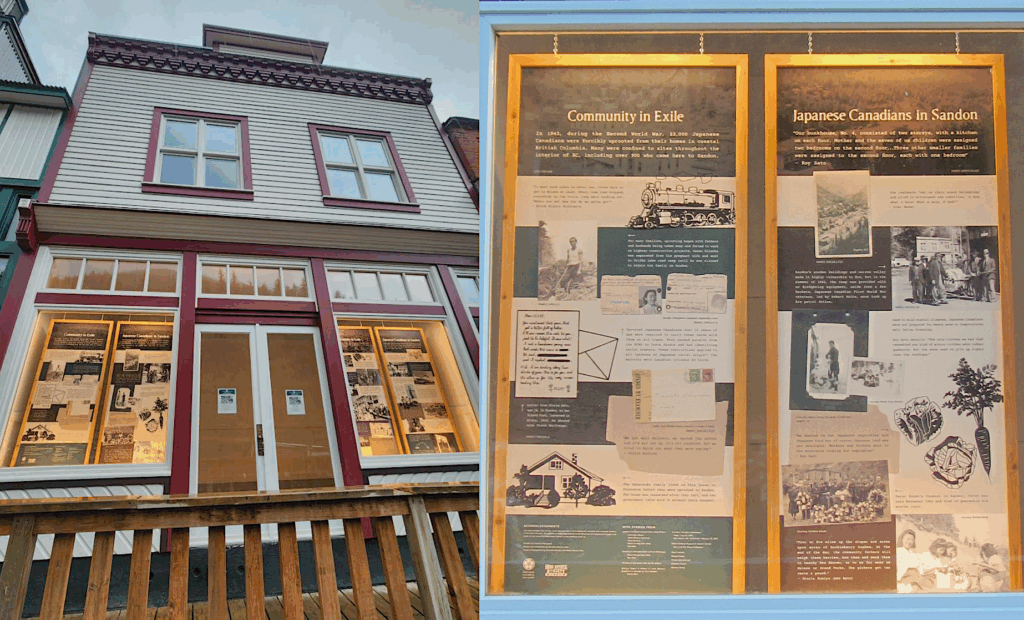
Located in the replica Burns building beside the Sandon Historical Society Museum in the historic ghost town of Sandon, Window to the Past uses four interpretive window panels to illuminate the powerful story of Japanese Canadians who were forcibly displaced from the West Coast in 1942 and confined in Sandon until 1944. Through themes of displacement, community, resilience, and relocation, the exhibit ensures these histories are seen, remembered, and understood.
Sandon rose fast. In the late 1890s, rich silver discoveries transformed a remote valley into one of British Columbia’s most important mining centres. Thousands poured in. Grand hotels, opera houses, and electric streetlights followed. Then, the silver market collapsed. A devastating fire tore through the town in 1900. Although Sandon rebuilt, the boom was over. By the 1920s, the once-thriving city was already fading on its way to becoming a ghost town.
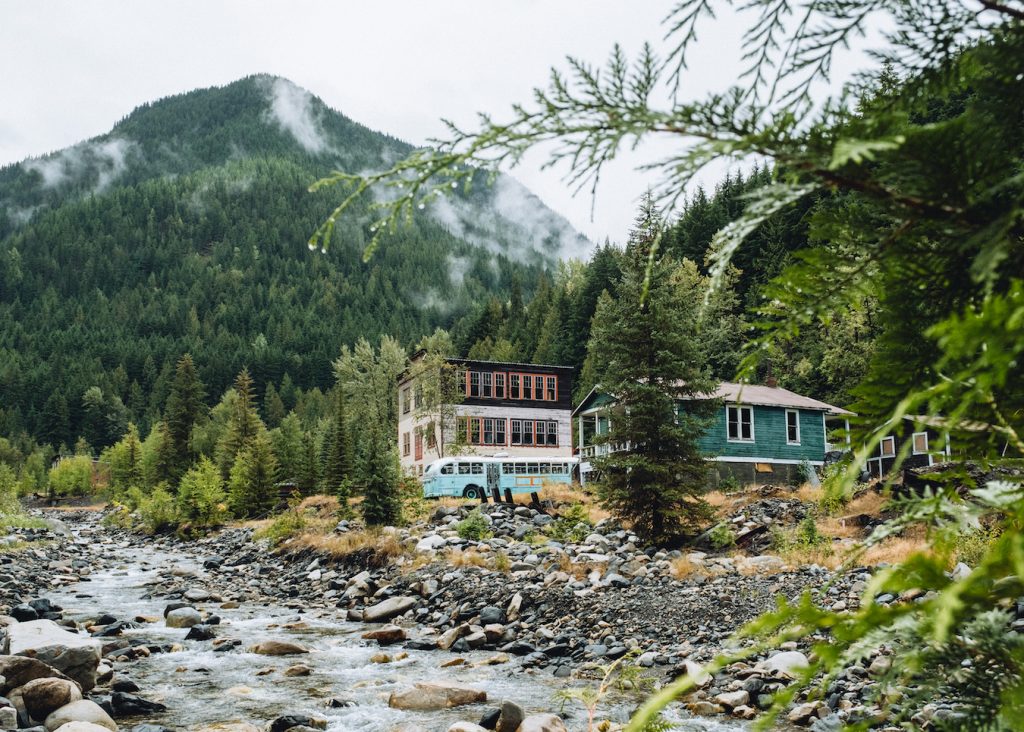
And then, during the Second World War, the Slocan Valley and other nearby communities were repurposed as internment site for Japanese Canadians under federal wartime policies (more than 22,000 Japanese Canadians were forcibly displaced from their coastal homes). With over 900 Nikkei people living in Sandon from 1942-44, they creating schools, sports teams, and community life amid forced displacement.
Sandon was the first internment site to close, largely due to the harsh environment, and internees were again uprooted and forcibly moved to neighbouring camps. Less than three years later came their final post-war displacement: a choice for most Japanese Canadians between exile to Japan or relocation east of the Rockies. Because the Sanatorium was in New Denver, many former internees were allowed to stay and it was the last site to close, but not until 1957, which helps explain the significant Japanese Canadian presence to this day.
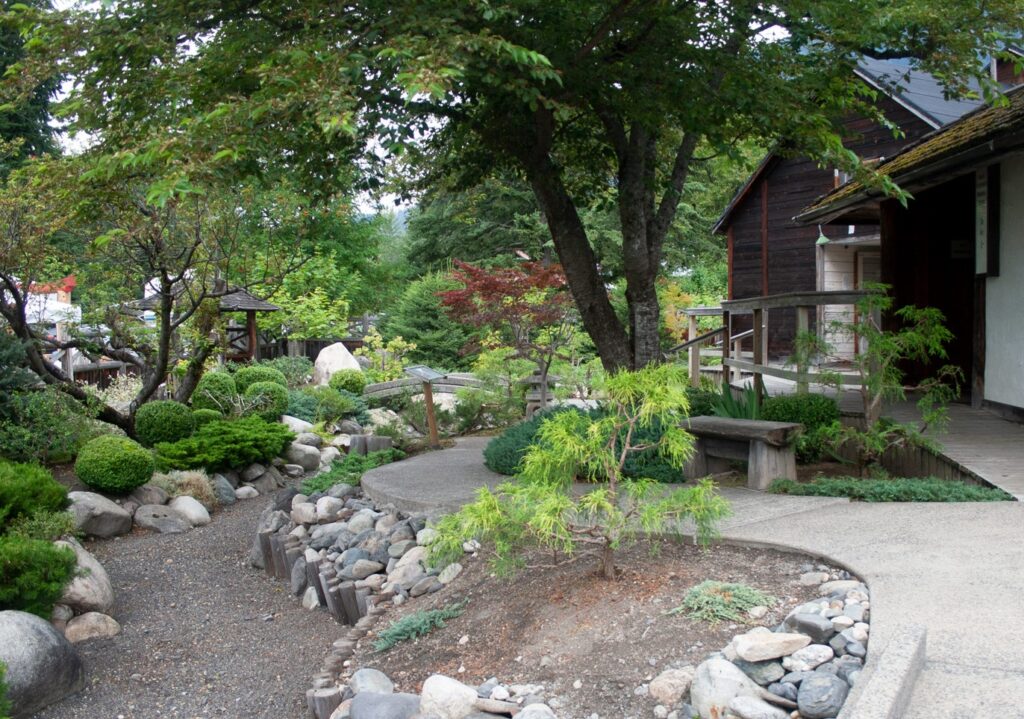
“The locals in this area are a friendly lot – even more so as you get to know them and when there is a need, we really come together to take care of one another. For such a small community, we have an amazingly eclectic mix of bright and talented people from all around the world. Some are attracted primarily by the magnificent scenery and/or opportunities for outdoor adventure, some by the great quality of life – ‘slow as you can Slocan,’ and others by the vibrant arts and culture scene,” shares Marsh.
“Yet the backbone of the village may be the old-time families who, having lived here for decades – some as far back as the silver rush days, others from the internment era, are civically minded and strongly committed to volunteerism, which inspires new arrivals. Living in a place where there is a true sense of community has a value beyond measure,” added Marsh (when we asked, What makes living here with other locals so special?).
RUDI GERTSCH
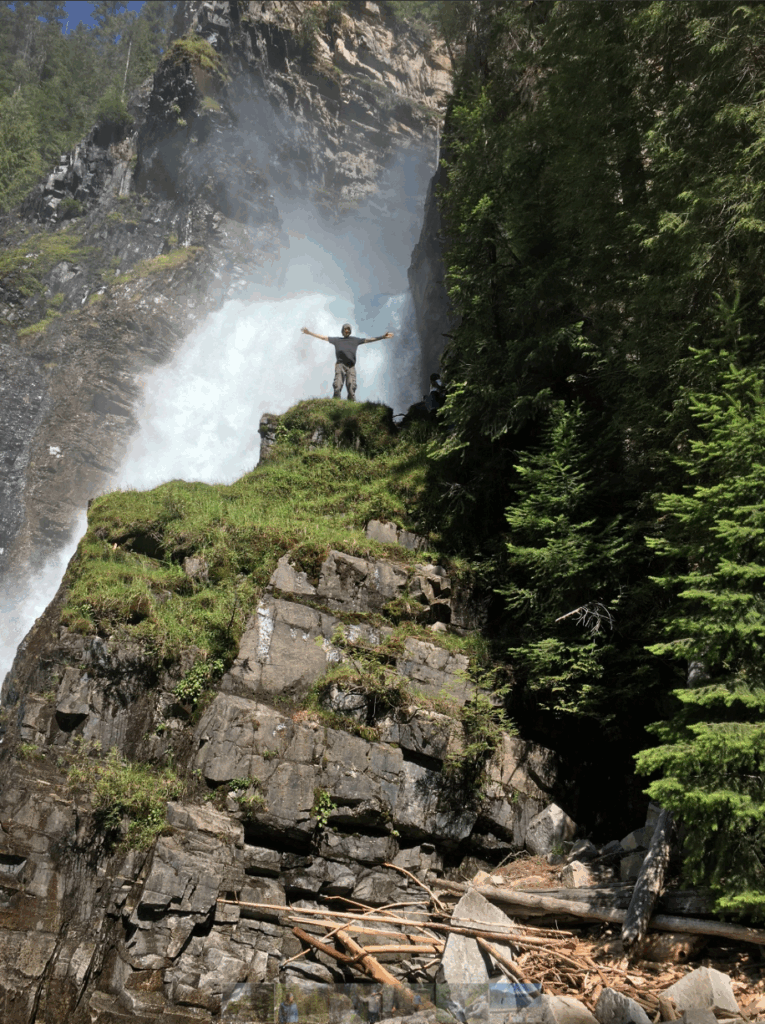
Rudi is a Swiss-born mountain guide and visionary whose life has been defined by high places and bold ideas. Raised in Wengen, Switzerland beneath the towering Eiger Peak, he inherited a deep respect for the mountains and a guiding tradition that would carry him far beyond the Alps.
When he arrived in Canada in 1966, Rudi brought ‘old world’ skill and instinct to the vast ranges of the Purcells in the Columbia mountains – which helped shape the early spirit and standards of heli-skiing in Western Canada (along with early discoverers, such as Hans Gmoser and Leo Grillmair).
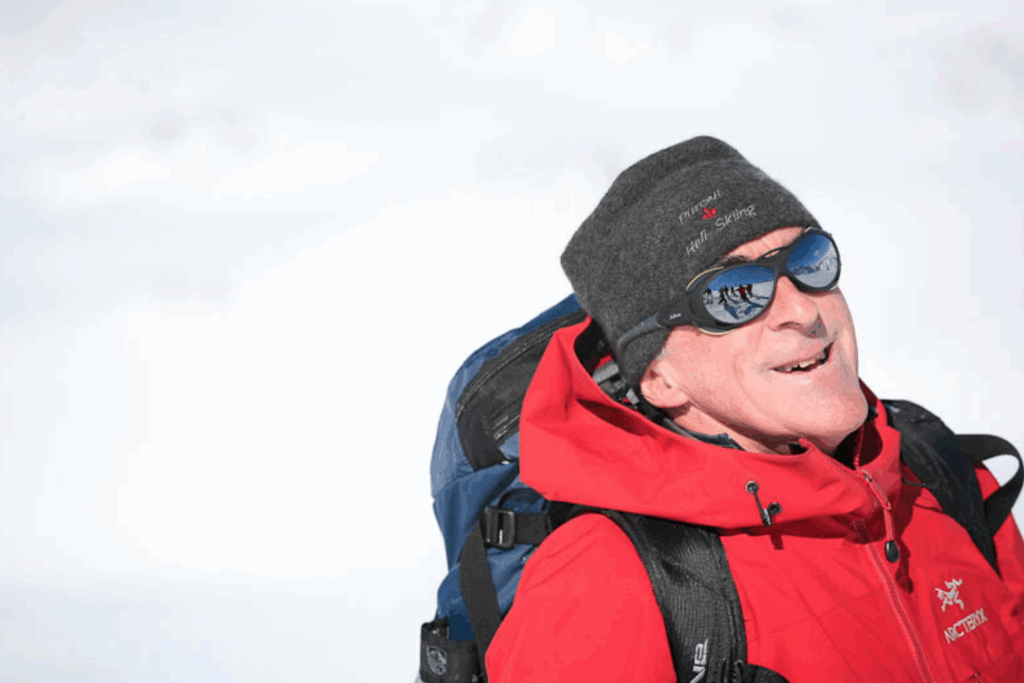
In 1974, he founded Purcell Heli-Skiing in Golden, transforming untouched terrain into legendary ski/ride experiences and built one of the province’s most respected heli-ski operations. Known for his technical excellence, warmth, humour, and storytelling, Rudi guided not just skiers and snowboarders, but generations of mountain professionals. And, often choosing the joy of snow and flight over the idea of retirement, even after his legacy continued with his son Jeff.
Rudi helped shape the early days of heli adventure, but what truly set him apart was the way he brought those wild places to life through story. Time with Rudi meant being transported to his childhood in Switzerland, to the rugged, untamed early days of heli-skiing, and to the bold pioneers who chased untouched peaks simply for the love of big mountains. For newcomers especially, his stories didn’t just entertain – they opened the door to a whole new world of adventure!
Rudi’s influence lives on today, as he and others have preserved the alpine heritage in Golden. As an advisor to the Swiss Edelweiss Village Foundation, he champions the protection of the historic chalets. These chalets tell one of the stories about the Swiss mountain guides, who shaped mountain culture in Canada – ensuring their spirit, like his own, continues to inspire future generations.
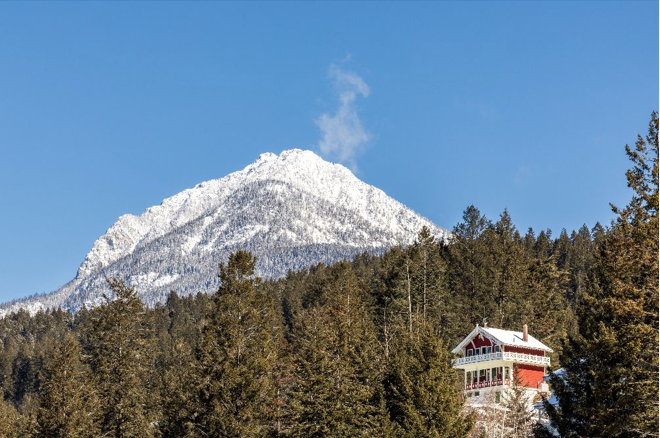
The Edelweiss Village & Resort, in Golden, is home to the historic Swiss-style chalets built between 1910-1212. The Swiss guides, hired by the Canadian Pacific Railway to lead guests on adventures in the Canadian Rockies, once called this home. These legendary guides shaped mountaineering, tourism and mountain culture in Western Canada.
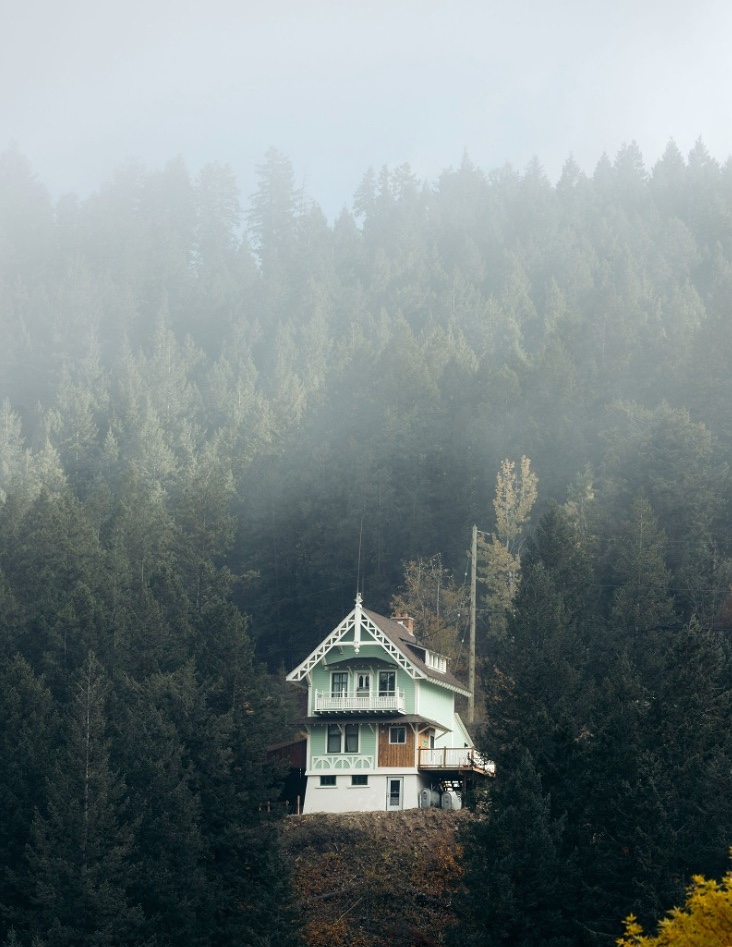
Cover photo courtesy of Edelweiss Village & Resort in Golden.